
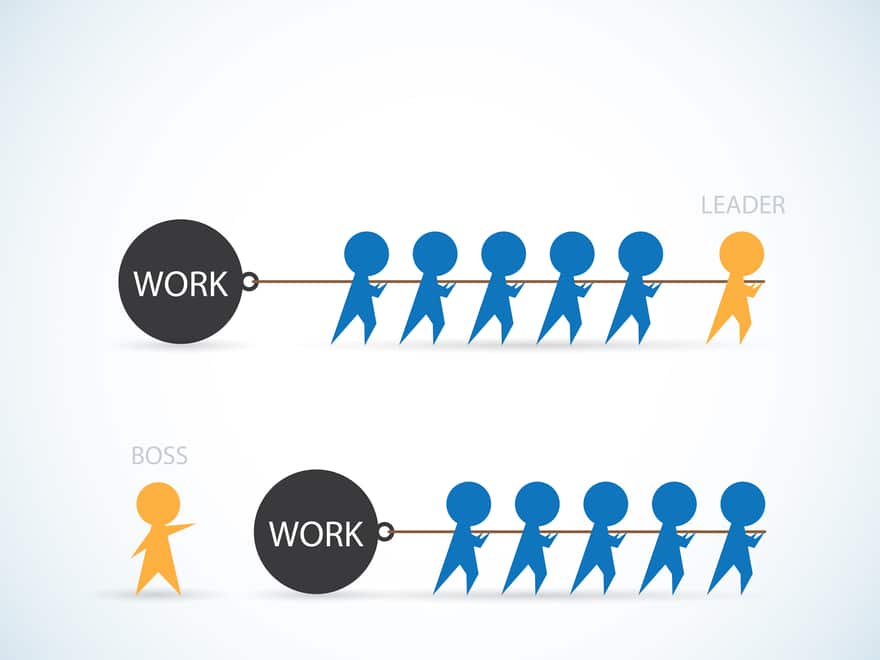
In many companies, the terms managers and leaders are used interchangeably. But they represent two different personalities. As a result, there are significant differences in the work style, and the outcomes also vary by a considerable level.
Leaders are widely known to take their teams to new heights. Therefore, many managers also keep looking for ways to prove themselves as leaders to set up an influential work culture. But to build your habits as a leader, you should first understand the common differences between leaders and managers. The professionals at Global Investment Strategies have identified three common points to differentiate between leaders and managers. Spare some time to go through the details below, and soon you will be able to add value to the work culture in your organization.
Creating Value vs. Counting Value
When you manage people, you will often count on value instead of adding value. But unfortunately, managers only measure value, and in this process, they often reduce value by disabling people who add value to the system. For instance, if a diamond cutter is forced to report to the manager how many stones are cut every 15 minutes, you are distracting him from doing work and ultimately subtracting value.
On the other side, leaders focus on creating value for themselves and the work done by their followers. They try to lead people by example instead of putting hallmarks of actions. As a result, it gets easier to achieve enhanced efficiency at work.
Power vs. Influence
Managers have subordinates, whereas leaders are known to have followers. This difference is why we say that managers create a castle of power, but leaders develop a circle of influence. The best way to figure out which one of these is you is to check how many people come to you to take advice after regular reporting hours set by hierarchy. If you have more such people in your life, you are a leader.
Managing Work vs. Leading People
When we talk about management, it is basically about controlling a specific number of people or entities to achieve a goal. But leadership is the ability of an individual to motivate, influence, and help others contribute to the organization’s success. Inspiration and influence are the key elements that set leaders apart, not the control and power.
If we take an example from India, M.K. Gandhi motivated millions of people to initiate a fight for their rights, and in this journey, he walked with them shoulder to shoulder. Such leadership helped India achieve independence later in the year 1947. A leader’s vision provides direction to his followers, and they feel a push towards the ultimate goal of their life. This thing works similarly at the organizational level, where leaders can motivate their teams to work in collaboration to achieve organizational goals.